Featured post

The Scottish Islanders

  Get your copy from  www.shop.yachtarchive.scot  !

Showing posts with label Kyla. Show all posts

Sunday, 17 December 2017

Kyla Sails Again!


Earlier in this blog I've posted the saga of the Kyla and the struggles by the Russells to bring back a trophy from the United States, here : Scots in Oyster Bay I'm delighted to report that I've heard from Kyla's new owners and one of them, Jean-François THAU, President of the Cercle de la Voile du Bois de la Chaize has contributed the following guest post. Blogging has very few direct rewards and this is one of them!

Act One : The Boat

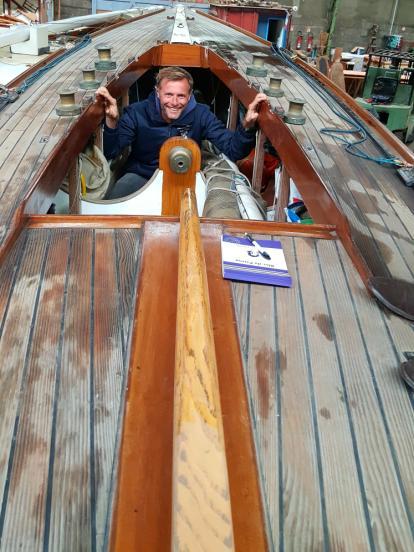
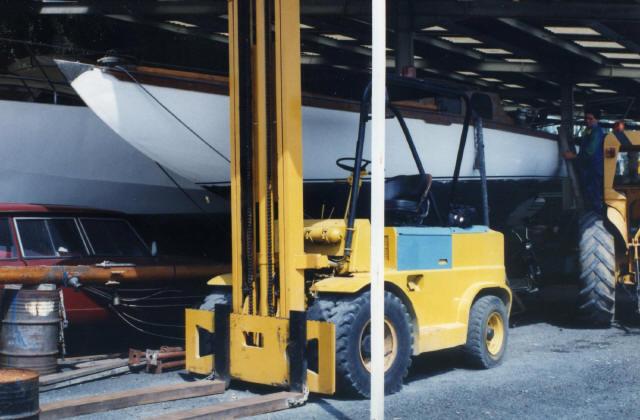
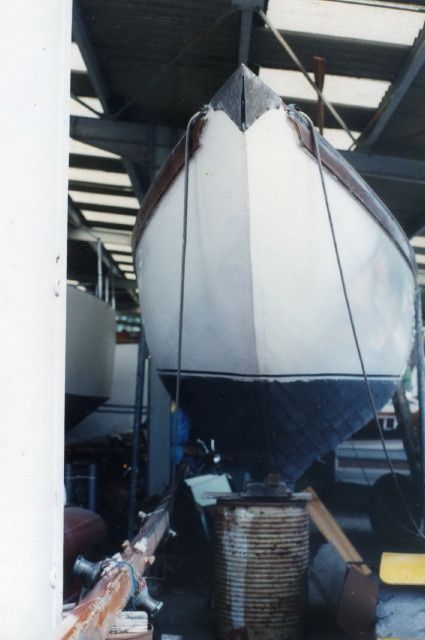
Cornered by machines, a boat of traditional construction sits on her shores. A quick look shows that she’s definitely a six metre that’s undergone a less than aesthetic modernisation. Her name is Blue Monday, date of construction 1934, origin Scottish. Acquired by three pals in 1992, the Blue Monday had seen the start of a restoration that sadly hadn’t been finished by the trio.

In 2006 the Blue Monday is donated to the Conservatoire Maritime du Havre, an organisation that takes on classic yachts and boats, supports their restoration and sells them on.

At the lecture celebrating her acquisition we learn that her original name was Kyla. The first step in her restoration is the decision by the CMH is to give her this back.
http://idata.over-blog.com/3/23/33/42/img289_1_1.jpg

http://idata.over-blog.com/3/23/33/42/img285_1.jpg

Kyle Act Two : Searching for origins


Following some deep research by Dany, the official in charge of acquisitions, the plans are recovered from Scotland. Receipt of these is a great moment for us, because they enable us at last to know Kyla’s true physiognomy. That moment settles some things for us, the helmsman’s cockpit was identical, but we have a different arrangement for the backstays and will have to add two winches.

A visit from Tim Street, the Honorary President of the British International Six Metre Association brings us a whole complement of precious information.

The renaissance has begun!

http://idata.over-blog.com/3/23/33/42/100_0788_1_1.jpg


http://idata.over-blog.com/3/23/33/42/100_0813_1_1.jpg


Kyla Act Three : The Boatyard


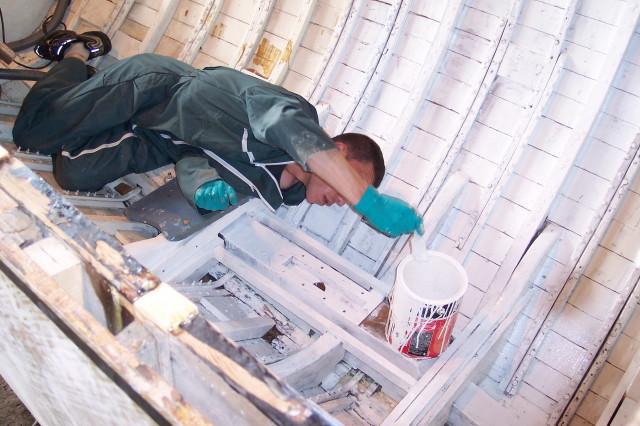
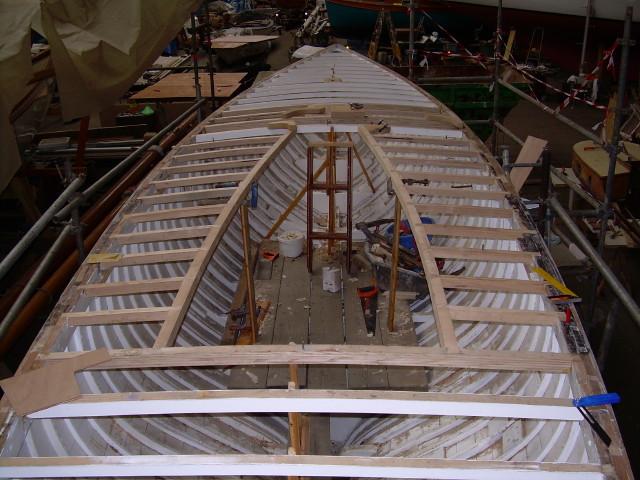
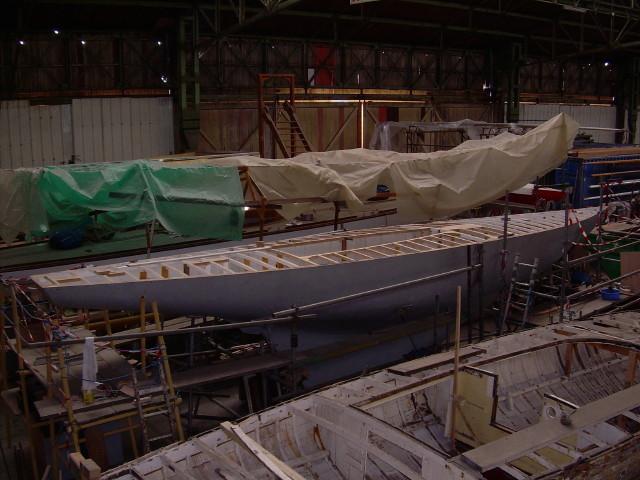
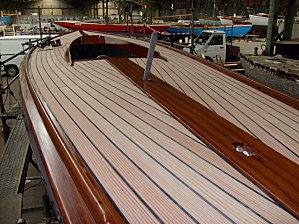
Once the transfer to the yard is done, the work of assessing the real state of the boat and producing an accurate survey follows. This defines the various tasks and how to do them, make provisions, form teams and distribute the work, always remembering that Kyla herself will guide our professional efforts.
http://idata.over-blog.com/3/23/33/42/N1493_1.jpg

http://idata.over-blog.com/3/23/33/42/N1506_1.jpg

http://idata.over-blog.com/3/23/33/42/N1588_1-copie-1.jpg


Kyla Act Four : The Group Dynamic

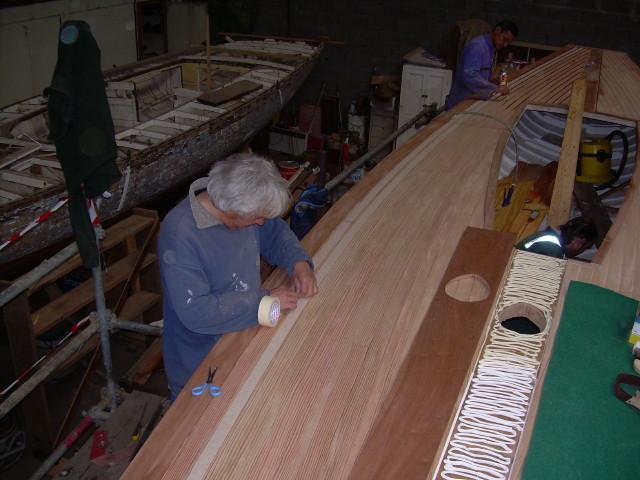
The work proceeds, Kyla’s silhouette takes shape, problems are resolved, such as our blacksmith quickly realising that he has seriously underestimated how much he will have to do on a wooden boat. The dynamic of the group grows in strength, everyone knows his role, every piece of wood has to be perfect, all metal parts solid, aesthetic and brilliant, filling and sanding perfect, the masters words in our ears 

“no shitty painting or varnishing, everything solid and lovely”

http://idata.over-blog.com/3/23/33/42/2007_07190389_1_1.jpg

http://idata.over-blog.com/3/23/33/42/N1883_1.jpg


Kyla Act Five : The Rigging


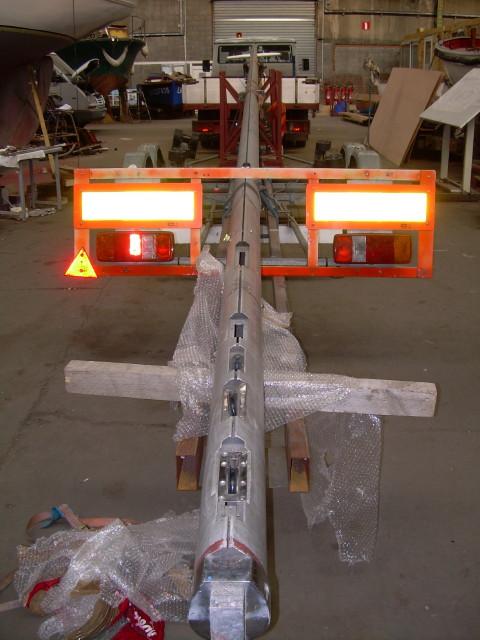
The mast provokes an animated debate, because it doesn’t exist any more. What to do? Making a new one is technically possible at the CMH, however Patrick explaining the technique makes us realise that this measures 14.70 metres to a top like the head of a lightbulb. “Look, we’re restoring a regatta boat and we’ve only got ten months to get the whole job done and try out the complete boat on the water.”

The decision is made, we’ve got to find a mast, a task given to Ronan, an active member of the Association.
http://idata.over-blog.com/3/23/33/42/N1550_1.jpg

http://idata.over-blog.com/3/23/33/42/S6300291_1.jpg


Kyla Act 6 : Completion


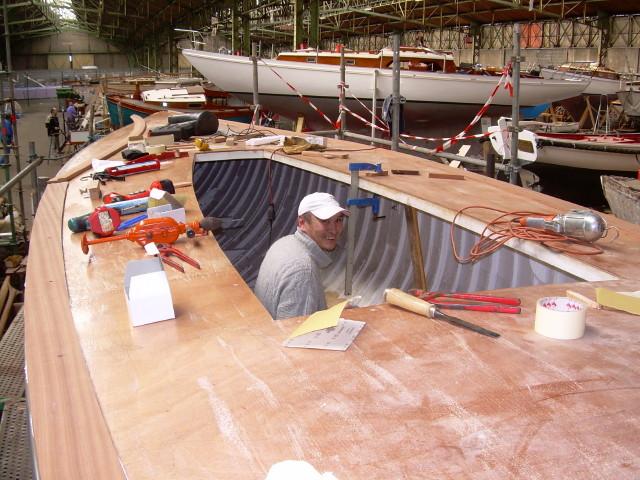
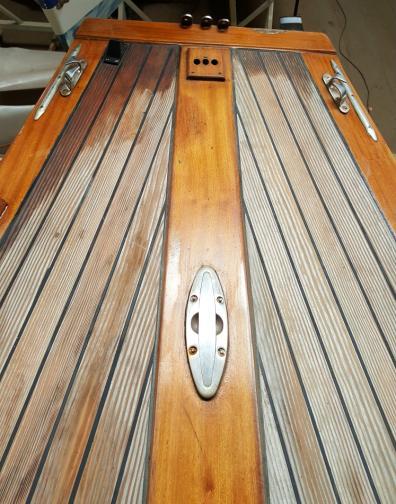
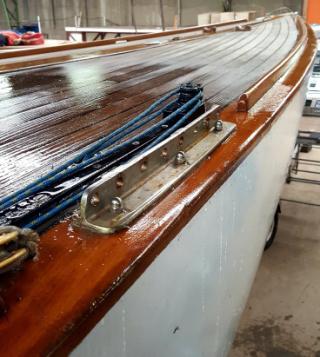
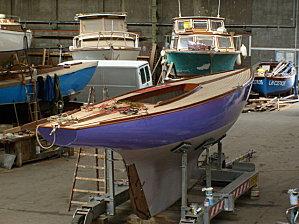
The project goes ahead full tilt, the restoration goes forward fast, the helm, the furniture, the fittings are put in place.

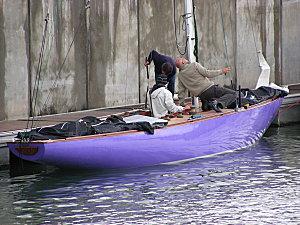
The first coat of paint goes on, the colour surprises us but gives a touch of originality. Why mauve? To give a nod to the the Swiss, whose waters we are sailing on, the colour of MILKA chocolate bars!
S6300214 1

S6300282 1

S6300270 1


Kyla Act 7 The Big Day


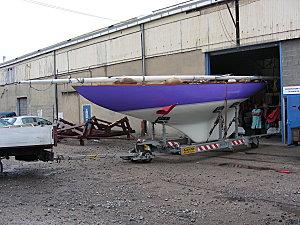
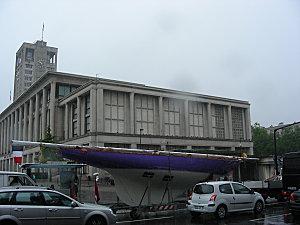
It’s arrived, the big day! An official presentation and presentation to the public, everyone is there, friends, families, participants.

The trip from the yard to the launch site is a great moment, it rains but who cares because we’re all overheating.

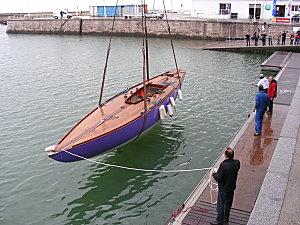
The boat touches the water, bravo to everyone! Kyla is beautiful and floats, now we just need to sail her.
mise à l'eau KYLA 007


mise-a-l-eau-KYLA_051.JPG


mise-a-l-eau-KYLA_144.JPG


mise-a-l-eau-KYLA_168.JPG

Kyla Act 8 : Handing over


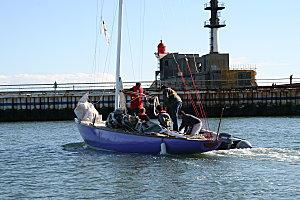
Busy with the final preparations for another big day with Kyla under sail.

Sadly we’re sorry to miss out on this premiere. Well, one is doing well just getting a boat like this to go, as it’s not at all evident!
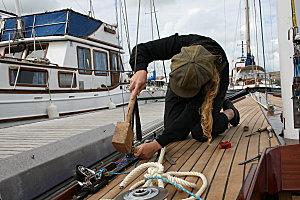
IMG_0781.JPG

IMG_0786.JPG


IMG_0802.JPG


IMG_0854.JPG

Kyla Act 9 : Welcome to Switzerland


This part of the story consists of us arriving at Lake Geneva just before the historic boat regatta.

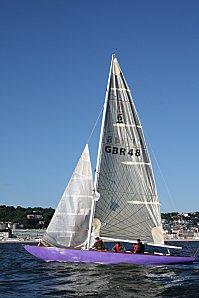
It’s lovely to see our Six with all the other classics. What a welcome we got from the Cercle de la Voile Vevay - la Tour

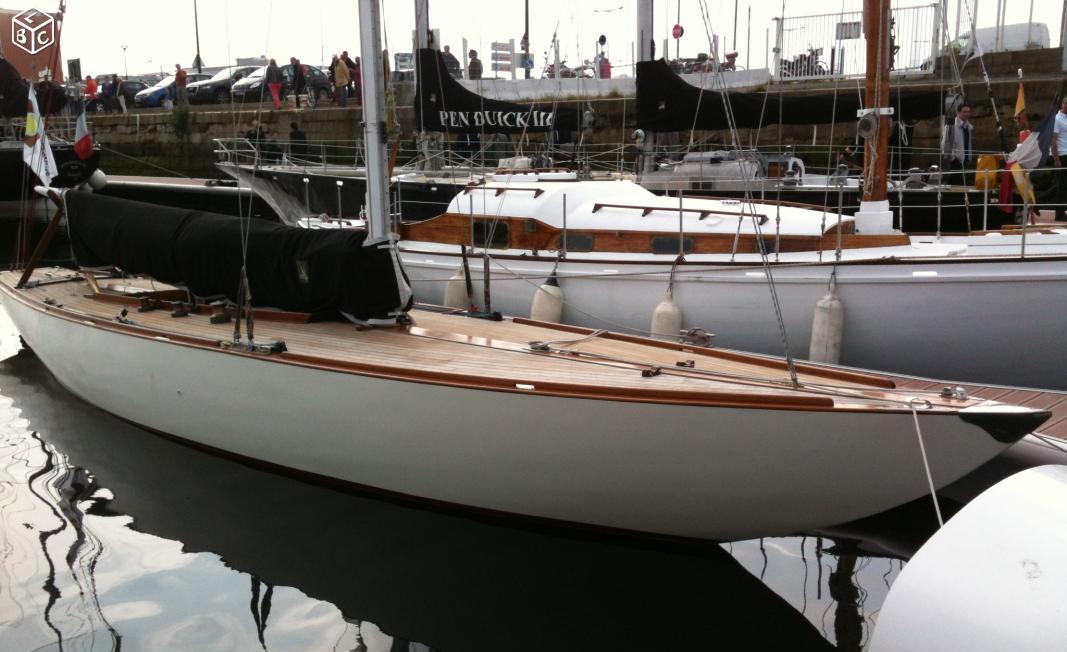
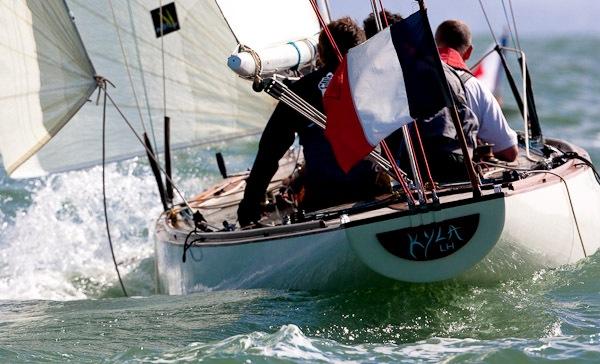
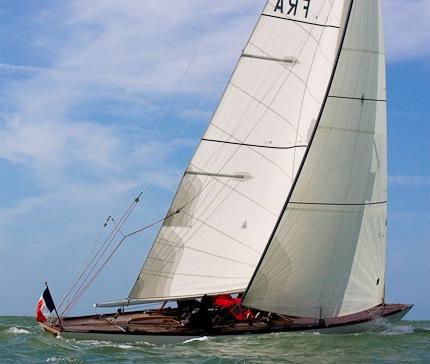
Kyla Act 10 : The boat is acquired in 2003 by Gilles Piette


She is repainted white and re-equipped with racing hardware. She takes part in several regattas at le Havre and Deauville until 2015, when her owner throws himself into the restoration of the Eight Meter Silk …


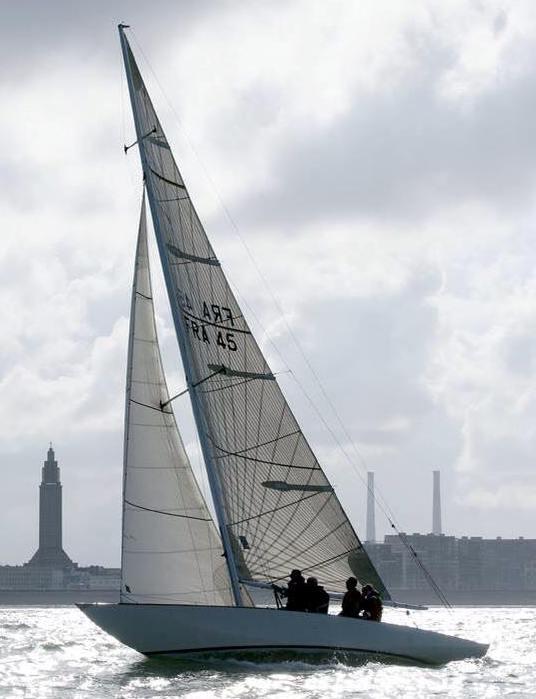


Kyla Act 11 : Stop Press September 2017

A band of comrades from Noirmoutier buy the boat from Gilles, beefing up the fleet of Sixes at the Cercle de la Voile du Bois de la Chaize .

The latest episode in the story of ten years in the recent history of Kyla happens one Monday in September, when after spending the whole weekend in discussions with Olivia and Valerie, Vincent and Jeff go to le Havre in torrential rain to see the boat.

The charm works at once. The decision to buy Kyla takes a few hours! With Christophe and Geoffroy having joined in the adventure by, the boat will join Noirmoutier in Spring 2018 with a view to the Metric Challenge 2018 Metric Challenge 2018 and the European Six Metre Championships European Six Metre Championships starting in September at La Trinite …

watch this space!


Thursday, 27 June 2013

SCOTS IN OYSTER BAY - Chapter Two - The Scots Invade


Chapter Two

The Scots Invade

At the close of the 1933 season Willie Russell’s daughter, Udy, records in her diary,

“A definite challenge has been made by the British for the British-American Cup and the Seawanhaka Cup. It will be against the Americans and raced for at Long Island Sound. To buy, or not to buy, a Six Metre Yacht? Two new sixes are being built by Fife. One for Mr Teacher and one for Mr A S L Young. One six is being built by Mylne for Mr Clark. Daddy has decided to buy a six metre and he has ordered one from Mylne’s yard!!! Great excitement and planning for next season. I am sorry to part from Sanda as she has been faithful to the name of Russell. On this day, November the 28th 1933, we drank to the new boat, her name may be “Aline” after me or “Luinga”. But is now “Kyla” after Kyles of Bute.”

1934 would be a year of great excitement in the wider yachting circles, with the latest British challenge for the America’s Cup in Sopwith’s Endeavour going ahead against Rainbow, but at home on the Clyde the buzz was all about the new six metres; Mr Teacher’s Melita, Mr Young’s Saskia II, Mr Clark’s Volga and of course Willie Russell’s Kyla.
 
Kyla at Bute Slip Dock before her launch

going down the ways

weighing at Rothesay Pier

The Press wasn’t optimistic, the Express reporting,

“On the occasion of the last contests for the two cups, which took place in 1932 in this country, the British yachts were soundly beaten. The American Jill defeated Mr John G Stephen’s Maida in the Seawanhaka races, and in the Solent four home sixes lost to the Yankee team…”

Just because you decided to build a new yacht didn’t mean you were entitled to be selected. During the summer a series of tuning up races took place on the Clyde. Yachts were divided into two teams, the reds consisting of Melita, Saskia II, Mr Clark’s older boat Vorsa and Kyla and the greens consisting of Mr Parker’s Fintra, Mr Clark’s new Volga, the Hon J P Maclay’s Susette K25 and the Donaldsons’ Maida.

Individual trials took place between pairs of boats. Melita was found to be a good boat in the light airs which could be expected off New york in late season, but was hammered by Volga in four races in strong winds. However, the latter’s three paid hands were probably a help.

Kyla then beat Melita in their trials. The final selection was Melita, Saskia II, Vorsa and Kyla. Meantime the Americans selected Lucie, commanded by Briggs Cunningham, Robert B Mayer’s Bob Kat II, Cornelius Shields’ Challenge and C l Smith’s Annis.

The Scots duly took with them a bunch of professional skippers and paid hands, but everyone aboard Kyla for the races was amateur – Russell father, son and daughter along with Wilson Thom, who in later life helped to fuel my addiction to sailing.
 
On the Clyde, Udy, Wilson Thom, Willie Junior, the Skipper
Willie Russell’s daughter, Udy, a sporting heroine before her time, is an important character in our story. In May 1915 the widowed Emmeline Pankhurst adopted four orphaned war babies to add to her four surviving children, who were by then adolescent. She promptly changed their names and destroyed their birth certificates, but this was only the start of an eccentric upbringing in a somewhat colonial style with servants and frequent moves, so that the young Joan Pembridge lived at various times in Vancouver, Toronto, Bermuda and Paris. When Mrs Pankhurst died in 1928 Joan was re-adopted by Willie Russell and his wife to become Udy Russell.
 
photo by her friend Uffa Fox

on the stern deck of Kyla

taking Mother for a sail

Udy never spoke about her early years, but they must have contributed to the independence of mind and spirit that she later showed in yacht racing. The Express reported,

“I’m the foredeck hand” said Miss Russell. “I attend to the spinnaker, clear the jib and make myself generally useful.” “I’ve steered too, in womens races, but of course I shall not be doing that in America. That’s dad’s job.” “Do you think,” I continued, “that yachting is good sport for women?” “The best in the world,” she laughed. “But you’ve got to take it seriously. It’s no use thinking you can only go out on nice days, and sit around the deck looking smart in trousers.”
Miss Russell wears navy and white jerseys and tailored flannel skirts. The yachts leave in the Caledonia on Wednesday, 29 August while the crews follow on September 8.”
The British American Cup series was due to start on 25 September. For the passage to long Island sound, the yachts were craned onto the decks of cargo ships and the teams followed later in style on passenger steamers. 

aboard ship

sightseeing in NY

As predicted in the Press the series was a disaster for the Scots. The first race was called off when the wind died, Challenge leading Kyla by a narrow margin. On the re-run, again in light airs, the American boats got the first four places, followed by Kyla, Saskia II, Melita and Vorsa.

For the second race there was a sixteen knot wind and the course was twice round a twelve mile triangle. The American boats got four out of the first places, the order being Bob Kat II, Challenge, Vorsa, Annis, Lucie, Kyla, Melita, Saskia II.

The third race decided things in stronger winds and a nasty jumpy sea. Kyla managed fourth place despite parting a jib halliard at the downwind mark. The order home was Bob Kat II, Challenge, Lucie, Kyla, Saskia II, Annis, Vorsa, Melita.

The Scots then chose Kyla to represent her country in the Seawanhaka Cup, while the Americans chose Bob Kat II. As good Corinthians Kyla’s crew remained unchanged, while Bob Kat II picked a new crew (and some fine sails) from the other boats. Kyla’s foredeck hand Udy Russell would now be pitched against Rod Stephens.

For two days there was a flat calm and it began to look as if time would run out before the scots would have to leave on their return voyage. Then it started to blow.

The first race took place in a 15 mph easterly, twice round a six mile windward/leeward course. At the start Bob Kat II as leeward boat used her right of way to carry Kyla over the line for a recall. Kyla squared off and ran down, followed by Bob Kat II, but the latter had less distance to go and came back through first. Kyla closed the gap on the beats, but Bob Kat II won by one minute and thirteen seconds in an excellent race lasting two hours ten minutes.

Kyla is pushed over the line
Bob Kat II

Bob Kat II won the second race by one and a half minutes. In a strong easterly with a rough sea the yachts sailed a triangular course. They were always very close but Bob Kat II got away on the reaching leg by hoisting a big double spinnaker. When Kyla put hers up she closed the gap, then at the gybe mark Kyla got hers down while Bob Kat II gybed the sail, managed to keep it flying although very shy and got away.

The next day it was calm again and the race was cancelled with Bob Kat II in the lead. The decider followed in thirty knots of wind. The dirty green water of the sound was streaked with white foam as the yachts were towed out with reefed mains and working jibs, keels showing in the squalls.

Kyla

Kyla again
Kyla started first and did well on the beat, looking as if she would pass in front of Bob Kat II, when there was a problem while tacking and she had to go briefly back to the old tack.

At the weather mark Bob Kat II got clear away, quickly setting a special small spinnaker. As she approached the mark boat Kyla got a wind shift and nearly hit it, had to put in two tacks to clear it and ended one and a half minutes behind. Kyla now set her spinnaker, at first on starboard tack but then had to gybe over, then as they approached the downwind mark Bob Kat II got hers down but Kyla’s was stuck aloft by a jammed halliard. The sail quickly tore to bits and she had to come up into the wind to cut it away, after which she was over nine minutes behind. Kyla now set a big genoa but this was too much and she laboured under it.

On the second round Bob Kat II played safe and didn’t set a spinnaker. Kyla was so far back she had nothing to lose, set hers and closed up a bit, but Bob Kat II was eleven minutes ahead at the finish.


In general the view was that the British had something to learn about carrying spinnakers reaching and
 “it’s not that they don’t have the boats or the men, just that they don’t make such a business of it as we do.”

The foredecks of slender yachts are not fun places and the Americans were rightly complimentary about Udy’s performance. There was another reason, too

“Really Miss Russell had a more successful visit here than her father did. The morning of the last race she and Lorna Whittelsey had a match race of their own (staged by Phil Roosevelt) in Class S boats in the bay at Seawanhaka,
and Miss Russell won by a length after a great race in a Nor’wester that was anything but a ‘ladies’ breeze.’”

Lorna Whittelsey was a year or so older than Udy Russell and every bit a match for her. A competitive sailor since the age of six, she would win the Women’s National Sailing Championship a record five times and would just have returned from Stormy Weather in the Bermuda Race, the first woman to take part.


Lorna, left and Udy, right on the day of their race


To be continued …..

The Wherrymen

The Wherrymen
Two old friends on the water