Sunday, 11 December 2011
Unique Boardroom Table by David Ryder-Turner
I am selling my boardroom table designed by well-known yacht designer the late David Ryder-Turner of Helensburgh and built by the professional cabinetmaker Jane Wright of Kilcreggan.
The table is a unique work of art, built to the highest standard of craftsmanship. It was made as a special commission from me and as an entry in a woodworking competition, which it duly won. It is oval in shape and measures 92.5 inches by 45 inches.
The top was made from a single log of Huon pine that David had brought back from Tasmania, to which a mahogany inlay was applied. The base was laminated from mahogany and sycamore.
The table is now surplus to requirements and is offered for sale at £2,000 (no VAT), but I will be happy to negotiate if it goes to one of David's friends. It can be seen in central Glasgow, from where the buyer would collect it.
If you are interested please contact me on ewangkennedy@gmail.com
Friday, 2 December 2011
Another Westra and a little more local history
Gisela Scharbaum recently sent me this image of another Westra, from the Royal Northern & Clyde collection, and asked if I could help to identify her. A quick trawl through the internet showed that she was the second of two raters of that name drawn and built by the genius of skimming-dish design, Charles Sibbick of Cowes.
The Charles Sibbick Interest Association have kindly allowed me to share the following notes, which they sent following my request for information:-
"First of all there is no known official registry of Sibbick Boat Plans/Drawings and not even a list of the building numbers of his boats.
However, we have managed to trace the names of nearly 300 of his boats with type and building year. We have spent some years on this. We know for a fact that he built over 300 boats until his death in 1912. There are also some enthusiasts, not so many, but are really into Charles Sibbick. We are all sitting with variable information from different sources. There are probably some boat plans in private ownership here and there. We have a lot but unfortunately none of Westra which was originally a 5 Rater measured over to 36ft Linear Rater in 1897. At the time her rig was altered from a Sloop to a Cutter and Jib and Bowsprit were fitted to her. The reason for the change was probably for Westra to fit in with the First Linear Rater. She was, as most of Sibbicks boats, extremely fast and was mentioned in several articles in the New York Times in 1896 and 1897.
In 1902 she was in the Yacht Register listed as a Lugger, with sails from Ratsey & Lapthorne (1897). Her Length was 36 ft (Linear Rater 36.03). A Beam of 9.8 and the Owner in 1902 was Sir R.H.Williams-Bulkeley, Port, Beaumaris.
N.B. There was also another Sibbick Rater called "Westra" but that was originally a one Rater, later converted to a 24ft Linear Rater.
What has happened to Westra, we are not sure about but when the International Rule came in 1906/1907 several Sibbick boats were measured over to fit the new formula for example 8mR.
We know for a fact that Sibbick was still registered as a Naval Architect with the address on Albert Yard , Cowes in 1905 and he continued building and repairing yachts, although not in such a large scale, but he had from time to time financial problems and the International Linear Rating Rule obviously caused him major problems, even if the new rule was not especially popular in the UK at the beginning. It was mostly in Scandinavia where those boats became extremely popular at once.
Sibbick had a lot of influence and was building a huge amount of boats, one designs and restricted classes for Europe and the United States and many other parts of the world. He was still active until his tragic death in 1912. (comment from me - It seems that Charles Sibbick eventually became depressed and drowned himself)
We can also tell you that J C Connell of Glasgow put his boat Westra, who was champion of the season, up for sale in 1897. Westra finished the season with the biggest record of a class and an explanation from Mr Connell was awaited as to why he was selling his boat!"John C Connell was a member of the famous family of Glasgow shipbuilders of that name. When he owned Westra he was in his early twenties, so she was rather a nice plaything for him. That she had no accomodation would not have troubled him unduly, as the records show that in 1895 the family firm built two steam yachts for their own use, SS Moneira and SS Athene. I haven't found details of the Athene, but the Moneira was eightyfive feet long, of 57 gross tons and her build cost was £2,150, information courtesy of http://www.clydebuiltships.co.uk
Charles Connell & Company was founded by John's father in 1861, when he resigned from his post as head foreman shipwright and latterly yard manager at Alexander Stephen & Sons of Linthouse. The Stephen company history records:- It is amusing to find that although Alexander Stephen, commenting on Connell's resignation, writes: "I do not think he will succeed," a pencilled note on the opposite page, inserted many years later, states that "Connell died in 1898 leaving over £300,000."
Actually Connell died on 14th February 1884 at his home in Broomhill Avenue in Partick, leaving an estate in excess of £250,000 and a well-founded shipbuilding concern. His eldest son, Charles B. Connell, succeeded his father and ran the yard with various brothers and half-brothers.
The family were close and built themselves a twenty two-roomed villa, Caol Ruadh, at Colintraive near to the Kyles of Bute Narrows, absolutely in the centre of Clyde yachting. Here is their 1901Census entry:-
You can see that brothers William, John and Arthur are described as shipbuilders, while younger brother Allan is "living on own means" and they have a butler, a valet, a cook and three domestic servants. The family gamekeeper Alexander Gillies lives next door in a one room cottage.
The 1911 Census shows John C Connell aged 42 and his brother William C S Connell aged 47 both living at Carston House, Ayr with their (half?) brother Alfred H Connell, aged 30, Alfred’s Irish wife, a valet, a groom, a cook, two housemaids and a French maid. Alfred was at the time an officer in the Royal Scots Fusiliers. John and William are both shipbuilders and employers. Later on Alfred became a ship owner and broker in Liverpool. He seems mainly to have owned small tramp steamers.
![]() |
| Carston House, Ayr |
There is a good website with information on the old Clyde yards here:- http://www.clydemaritime.co.uk It reports that:-
The last ship built at the Scotstoun Yard under Connell family management was the 12,011 tons cargo liner BENSTAC for the Ben Line of Leith, which was launched on 20th of November 1967 and completed in the spring of 1968. The Connell family, however, remained in business as Ship-Owners and Ship-Managers.
The Connells were regarded as one of the superior shipbuilding families of the many Clyde based shipbuilders, introducing many new techniques and investing their private wealth back into the business. More than most, Connell saw the benefits of maximising on standard production and prefabrication techniques, and were leaders in pioneering these new methods.
The fast cargo-liners produced by Connell for the Ben Line of Leith were regarded as amongst the finest examples of this Yard’s superiority in designing the best ships to fly the Red Duster of the British Merchant Navy, setting standards of excellence in naval architecture that were emulated throughout the international maritime world.
The 1934 Royal Northern Yacht Club handbook lists three
Connells, Charles, a member since 1924 and probably son of Charles B., Arthur, now living at Douglaston, Milngavie, a member since 1895 and John, now living at Craigallian, Milngavie, a member since 1891. Arthur and John are joint owners of Westra, a 1934 12 metre yacht K4 designed
by Charles Nicholson.
Arthur died at Dougalston in May 1949 aged 77, having been
Connell’s chairman since 1937. He had been a member of the Thistle syndicate 6
metre yacht for the Seawanhaka Cup but
she wasn’t ready in time and didn’t compete. He had owned or part owned six
twelve metre yachts.
If we add in Herbert Thom's famous Westra, about which you can read elsewhere on this blog and on http://www.scottishislandsclass.blogspot.com we've now traced four Westras, none of which still exists, the Twelve and the Islander having been destroyed during the War.
Wednesday, 30 November 2011
Coney Island Life-guard
Paul Kennedy has just started on a series of work inspired by his visit to the States earlier this year. We don't really have chaps like this on the shores around here, he would need a big woolly jumper and a Sou'wester, but it's nice to dream of warmer places.
Paul tells me the lifeguard is off to London to one of the galleries, but there will doubtless be more like him to follow. Although this is a slightly new, more international direction for him the work reflects some of the concepts and colours he has been working through in recent work. I've added a few examples below and more can be seen on http://www.paulkennedyart.com
Labels:
art,
Coney Island,
figurative painting,
glasgow,
life guard,
paul kennedy,
portraits,
scotland
Thursday, 24 November 2011
Some Thoughts on Model Boats
![]() |
| 8 metre yacht Fulmar, photo Gisela Scharbaum |
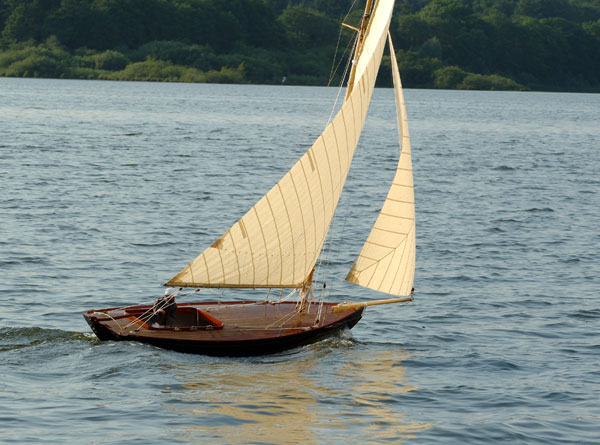
But their models are more than this. Apart from representing the prototype in all respects these incredible creations are also meant to sail. It seems to me that this inevitably leads the Scharbaums into areas of technical difficulty which lesser mortals would do well to avoid.
Firstly there are problems of scale. At anything smaller than full size the exact scale model will inevitably lack sufficient displacement to carry her full canvas. In other words what is a nice Force Three breeze to the full sized ship becomes a terrifying Force Six or Seven for her quarter or sixth scale model sister. It seems a pity to have to limit one's sailing of the model to days of gentle winds (are there any anymore?) or to have to devise a way of reefing down.
Secondly there are problems associated with keeping water out of the lovely open cockpits of these models and keeping the radio control equipment, batteries and servos dry.
For these reasons most conventional model-builders go down one of two distinct routes, building either full or half models for display or working models for sailing. However one also shouldn't lose sight of the original purpose for which ship models were built, to assist with the design process.
The earliest builders of full-sized vessels would start by carving a model out of solid. Once a shape acceptable to builder and client had been produced it would be sawn apart crosswise to produce sections, which would then be scaled up to produce the shape of the building moulds. Even in the computer age models still feature large in the design process, as the dynamics and variables involved when a hull passes through water at various angles of heel are far too complex for predictive modelling. Tank testing was first developed by the English mathematical genius William Froude, who persuaded the Admiralty to build the first one in 1871. Dennys of Dumbarton were impressed and built the first commercial tank in the world on the Clyde in 1883. Today tank testing is in use world-wide and the makers of the finest models in the United Kingdom are probably R F H Pierce & Associates of the Lake District. There is a fascinating insight into their thought processes and working methods here:-
www.jewelofmuscat.tv
Richard Pierce and his son James have occasionally built full-size yachts and sailing dinghies to order. After Richard completed the replica Scottish Islander Shona his client requested a display model for his house and James produced a first, "practice" one and a second, final version. Here is a photograph of the first one, which I took on a visit to Windermere before she was rigged.
David's website can be accessed here:- http://yachtmodels.co.uk/
Alongside these renowned experts I hesitate to portray my own efforts, which have been graced with enthusiasm rather than skill. I recently completed a six metre for radio control and it's been interesting to find that she actually floats. She's a John Lewis "Tern" design if anyone is interested.
The Wee Giff only took about thirteen years to build, off and on, and was completed with fittings from the English guru Graham Bantock, whose website can be found here:- http://www.sailsetc.com/
Labels:
David Spy,
Gisela Scharbaum,
Graham Bantock,
Helmut Scharbaum,
James Pierce,
John Lewis yacht designs,
model yachts,
radio control models,
Richard Pierce,
scale models,
scottish boating,
Shona,
test tank,
tringa
Tuesday, 15 November 2011
Tringa lives again - in more ways than one
I was totally astonished to receive the guest post which follows, with a digital album of photos. Blogging is a strange, solitary activity, which has to be seen as its own reward, especially one like this which makes no pretensions to be a money-spinner. Sometimes a bonus turns up, an unexpected gem of information or a story from another corner of the World from a kindred spirit.
I leave it to Gisela and Helmut Scharbaum to describe their obsession in their own words.
"Our interest in model making started sometime in the 1990s. I have always been interested in sailing and when we both saw a model of a wooden sailing ship during an exhibition of model makers, we decided to buy a model kit for Christmas. It was a modern plastic yacht, but since then we have been infected and many radio controlled models followed. We developed our interest in the classic wooden ones, which were not available as a kit. So we started to construct them completely according to the drawings, made everything for ourselves and thus we became more and more experienced.
One day in 1999 we saw the film "enchanted by the dragon" on TV, a film made by Tom Nitsch, a German film maker with special interest in Fife and his yachts. He knows a lot of the history, the yard and the owners. Secondly the book about Fife, written by Franco Pace, an Italian photographer, confirmed our wish to build a model of a Fife yacht.
We chose Fulmar, an 8mR and soon we found out that research was difficult and the drawings were hard to get. In the end we managed it with the help of the owner and since then things became much easier. Travelling around in Scotland and South England and the Mediterranean followed, and especially with the help of the RNCYC, especially Ian Broadley and May Kohn and all the other people in Scotland we learned so much about the Fife´s , found so many pictures and drawings which allowed us to build these models as close to the original as possible.
The first time we saw Tringa was in the book Fast and Bonnie, it is the picture which shows her standing on an iron slip trailer at Robertsons Sandbank. It was the design of the hull which is so remarkable, that we fell in love somehow. After finishing the model and having seen her sailing in 1:4, we made another step further and decided to try 1:1.
5000 hours later Tringa is sailing at the Baltic. There was a lot of learning by doing and one of the most dificult problems was to get the fittings. In the end we visited Classic Marine in Woodbridge and Ording Blokken in the Netherlands to order the fittings for the deck and the mast. For the rest, for example the roller fairleads we made wood patterns and let them cast in Britain at Haworth Castings. Research, trying to find out what Tringa looked like is one of our most favourite jobs.
The Schlei area is nowadays an area for leisure activities like sailing. But it still exudes its own special charm. Our problem is Tringa´s draft which is about 6 feet, and the shallow waters of the Schlei are tricky. For example our first trial was stopped by a sandbank, but we managed to get free again.
This year we left the Schlei for two weeks and crossed the Baltic towards Sonderborg and Aero. Tringa is seaworthy, she always lets you feel well and safe, she also forgives mistakes and is easy on the helm even in rough weather. She is always in a hurry, we logged 8 knots in fresh wind with a reef in the mainsail!
Sailing around with Tringa is like walking on a catwalk. Everyone is watching, asking, and taking photographs. We are faster than the Nordic Folkboats, which are especially designed for the Baltic. Addictive .
But the modern sail cloth induces a lot of power to the rig, therefore it was useful to add two more frames to fix the plates for the shrouds securely. This strengthens the forward hull and leads the force directly to the metal floors and keelbolts. Former designs were too weak at this point.
The runners are quite important for the same reason. We also have to get used to all the sheets and halyards, but after having made some experiments this summer, everything works better and better. "
Specifications:
Overall length: 24 ft
Length on waterline 19 ft
beam: 7,5 ft
draft : 6 ft
displacement 3 tons
ballast 2 tons lead
sail area 45 qm (500 square feet)
main 37 qm
foresail 8 qm
frames 5x3 cm
planking 2cm cedar, and larch beyond the waterline, glued with Aerodux and covered with glass fibre (800g Biax)
deck plywood 8mm and 6mm teak/mahogany , the spars are of spruce
bow sprit is of Oregon pine
There's a short film about this talented pair that can be viewed online here:-
www.sailing-films.com
And there's a great deal more information about the old 19/24s here:-
www.clyde19-24.org.uk
Sunday, 6 November 2011
The Shieldhall was a Sludgeboat and she sailed upon the Clyde
A month or so ago the Brother and I made a trip to the deep South. There was a boat show on at the time, but we had no interest in visiting that. After all we had no interest whatever in acquiring one of these,
or these,
and we couldn't afford one of these
On the contrary we were down to visit our old Aunty, who had just become a hundred. Being at a loose end after the festivities we went for a wander into town and soon came upon a sight familiar to us in childhood, the old SS Shieldhall.
Glasgow Corporation had two of these ships taking sewage sludge from the population, then of a million or so, down the river. All of our major cities commissioned similar vessels, which operated until such an activity ceased to be permissible. There were two of these ships in Glasgow, the Shieldhall and the Dalmarnock, daily enduring signals from passing ships along the lines of "Where are you bound? What is your cargo?" in the days before the city ceased to be a great port.
The trips were a great boon for the pensioners of the city, who could get a free trip, a cup of tea and dancing to live music. Many a geriatric romance must have started on board, especially for those without a sense of smell.
Shieldhall now tries to earn her living as an excursion boat on the Solent, but in the present recession she is suffering somewhat. Earlier this year I heard of her plight and resolved to do something for her, not sending money of course but providing her with a nice song, the royalties from which could perhaps secure her future.
From this project I have learned about the difficulties faced by the budding songwriter/singer/impressario. You don't just write the thing and sit back to await fame. Writing it was the easiest part, certainly a lot easier than persuading my musical wife to provide a tune. A group of local women were in the habit of singing in a cowshed on Thursday evenings, but by the time I approached them they had disbanded. Months went by without the song being heard, delaying the anticipated revenue stream endlessly.
The world premiere eventually took place at that centre of the universe, Toberonochy. The song was duly preformed by a male voice choir, Charlie, Ken, Bill, John and self, before an invited audience to ecstatic applause. Sadly the event wasn't recorded as Richard, who was supposed to be there with a camera, had fallen asleep. In case someone else in the blogosphere has more luck, I reproduce the music and the lyric below. You can read more about the Shieldhall here:- www.ss-shieldhall.co.uk
The
Song of the Shieldhall
The
Shieldhall was a sludgeboat and she sailed upon the Clyde
Two
hundred sixtyeight feet long and fortythree feet wide
To
Ailsa Craig she'd go, in sunshine and in snow
dropping
off her cargo in the deep brown tide
Chorus: To Ailsa Craig she'd go, in sunshine and in snowdropping off her cargo in the tide, deep brown tide
The
Shieldhall was the finest ship that I have ever seen
Her
captain wore a jacket of Corporation green
Her
hull was painted grey, she chugged along all day
While
the sailors scrubbed the decks and kept them clean, kept them clean
Chorus: Her hull was painted grey, she chugged along all dayWhile the sailors scrubbed the decks and kept them clean, kept them clean
Now
some ships sail to India and some sail to Tiree
Some
sailors meet with sharks and whales and some just see the sea
Those
sights are pretty rare, but the best thing I declare
On the
Shieldhall you were always home for tea, home for tea
Chorus: Those sights are pretty rare, but the best thing I declareOn the Shieldhall you were always home for tea, home for tea
From
Whiteinch and from Partick and from Yoker to this boat
All had
in mind a purpose, to get themselves afloat
And if
they did incline, to drink a little wine
Making
sure they had a bottle in their coat, in their coat
Chorus: And if they did incline, to drink a little wineMaking sure they had a bottle in their coat, in their coat
For
many years the Shieldhall did sail upon the sea
delighting
all, who got a cup of tea
but the
finest thing to tell, never mind the rain and smell
for
pensioners the trip's completely free, all for free
Chorus: but the finest thing to tell, never mind the rain and smellfor pensioners the trip's completely free, all for free
If you're daft enough to have read this far you may have noticed the subtle difference between the original version of verse one, given under the tune, and the revised one. The ship was of course launched in 1954, not 1953.
Monday, 31 October 2011
John Gardner's Quincy Skiff
The late John Gardner of Mystic Seaport was apparently unable to pursue a teaching career on graduating from Columbia because of his political views, but formal education's loss was a great boon to the wooden boat community. Very few people combine practical ability with good writing skills, but his books on building classic small boats are so clear and inspirational that each chapter seems to cry out "please build me".
So I found myself while building the Swampscott dory in Volume one devouring the other chapters and wondering which would shout the loudest. In the event the modified Quincy skiff won out and became my next project. At the start of the chapter on her the Guru writes that she
“should row well, but build easily and cheaply. This is not a racing shell, obviously, nor is it intended for the open sea. This simple skiff should do well on lakes, large rivers, and sheltered waters along the coast.”
There were aspects of the construction that seemed particularly intriguing. She has an almost flat bottom formed from four softwood planks spliced together, two per side, to form chine logs that will be cross-planked over later.
Once cut to shape, the logs are set upside down on horses positioned at a convenient height, then suitably bevelled, and the transom and stem are added. Next the enormous plywood sides, over eighteen feet long and each needing two scarfs, are tortured into shape.
The book didn't actually say how difficult it would be to do that last bit, nor did it point out that a dry fit usually goes rather better than the real thing. I did this build single-handed and could have done with a helper to control the plywood sides, sticky and slimy with glue, as they slithered around on the temporary building moulds. Bringing the sides together was a real struggle, as I had decided to add both at once, in order to balance out the inevitable stresses on the jig. For a while this caused me a real panic, until I decided to screw battens to the plywood sides to get a proper grip on them. The battens could then be subjected to a lot of force with Spanish windlasses.
Fortunately I wasn't using a fast-hardening glue, and I eventually managed to close the gaping spaces at the bow at the expense of a lot of cursing and badly blistered and glued hands. After this planking the bottom and adding the seats was pretty simple.
The result was a stylish and very unusual rowing boat. The only problem was that we don't live on a lake or large river, nor is our coast all that sheltered. Perhaps I had skipped over that first paragraph in my eagerness to get building. With her flat bottom and long slab sides this skiff is no boat for a cross wind of any strength, or a seaway. In a calm she's a delight to row and my wife still recalls the trip we had one very crisp and sunny New Year's day, travelling effortlessly over four miles down our loch and back.
Because calm days don't happen often in our part of the world the skiff passed fairly soon into the hands of friends who did live beside a sheltered loch, whose sons got great use out of her. They are now grown men and the family have moved on, but the skiff is still on the lochside, more than twenty years later and reasonably serviceable, although some of her bottom cross-planks have been replaced from time to time.
Update on 2 November 2011
Dave Gentry has kindly allowed me to share some photos he took of this Quincy skiff doing good service in the catering trade. He has a fascinating collection of designs on his own website, here:- http://www.GentryCustomBoats.com
Labels:
argyll,
john gardner,
Mystic Seaport,
quincy skiff,
rowing,
scotland,
scottish boating,
wooden boat
Subscribe to:
Posts (Atom)
The Wherrymen
Two old friends on the water